

Growing Together – The importance of coherent B2B brand architecture and how to get there
The problem of architecture
It sometimes feels like businesses talk more about architecture than the people who actually build houses.
Branded houses. Houses of brands. Masterbrands. Sub-brands. Endorsed brands. And endless debates about how they should all fit together.
Brand architecture is a challenge for almost every business, but it’s one that seems particularly acute for large B2B organisations, where years of growth, diversification and acquisition can leave behind a complicated mix of brands, businesses and services that don’t always make sense together.
So how should you think about your brand architecture? And, more importantly, what should you do about it?
To answer that, you first need to understand why the problem exists in the first place.
It is a universal truth that growth creates complexity
For large B2B businesses, growth often means:
- Developing new services and capabilities.
- Expanding into new categories and markets.
- Creating new sub-brands.
- Acquiring businesses with their own brands and equity.
Each decision makes sense in isolation.
Each is designed to create growth.
But over time, the result can be a complicated collection of brands, services and businesses that don’t clearly fit together. Ironically, the very things created to drive growth can start to hold it back.
Your brand is your shop window, so messy matters
It’s how customers make sense of your business, and when your architecture is fragmented, it creates a fragmented picture of your whole organisation.
If you look disjointed, customers assume your business is complex and hard to work with.
It becomes harder for them to understand what you do, what you stand for and why someone should choose you.
And perception matters, particularly in B2B, where trust and confidence are fundamental to purchasing decisions.
The commercial consequences go much further than perception
A fragmented brand architecture creates barriers to growth across the business.
- Customer acquisition: Making it harder for customers to understand your offering and why they should choose you.
- Cross-selling: Preventing existing customers from recognising the full breadth of your capabilities and making it harder for teams to sell across the business.
- M&A: Making it harder to integrate new acquisitions and create a compelling platform for future growth.
- Internal unity: Reinforcing silos, competing agendas and separate identities rather than a shared sense of purpose.
- Talent: Making it harder to communicate a compelling employer proposition and attract the best people.
- Cost, time and effort: Quite simply, the cost and time of managing a portfolio of brands and sub brands are exorbitant.
In summary – a fragmented brand architecture can mean a fragmented growth opportunity.
The answer is coherence. But coherence doesn’t mean uniformity.
Brand architecture discussions often get lost in the language of branded houses, houses of brands and endorsed brands. But there’s a more fundamental question to answer first.
Broadly, there are two overarching approaches:
- One masterbrand, multiple services: A single customer-facing brand organising a range of services and capabilities.
- One group or parent brand, with multiple standalone brands: A unifying brand sitting above a collection of distinct businesses or brands. There are countless permutations within this approach. Sub-brands, endorsed brands, portfolio brands.
And look, the permutations are not inherently better than each other. There is validity in all of them. What is important is not to make everything conform. It’s to make everything make sense.
The one thing that must be established is whether you are a single brand with a service or a collection of different brands. And this simple question can often be the hardest one to answer and is where the complexity lies, because it determines how you are understood, inside and out.
This is where the fundamental complexity lies in how you are understood inside and out.
The right architecture is a commercial decision, not a design preference.
It depends on the realities and ambitions of your business.
- Where does your existing brand equity sit?
- How valuable are the individual brands you’ve built or acquired?
- How much overlap exists between customers?
- How significant is the cross-sell opportunity?
- How important is the independence of individual businesses?
- What structure best supports future acquisitions and expansion?
- How can you create the greatest long-term value with the least unnecessary disruption?
The goal is to create an architecture for the business you want to be tomorrow, not simply organise the business you are today.
And, almost always, that will be the one with the greatest possible coherence and unity. As one client we spoke to said, ‘If my businesses functioned as one, I could save £300K just through a single audit.’ And that’s only the tip of the iceberg.
Structure alone doesn’t create unity.
You can create the clearest architecture in the world. You can give every business a consistent visual identity. But that doesn’t necessarily make them feel like part of something bigger.
Because what really holds everything together isn’t just the logo or the design system.
It’s a powerful, organising Brand Idea. One that sits at the highest level of the business, whether that’s a Masterbrand or a group brand.
An idea that defines what the business stands for, what makes it distinctive and, what unites everything that business does – in short, what everything ladders up to.
The organising Brand Idea becomes the common thread running through:
- Your proposition: Giving every service or sub-brand a role in delivering a bigger promise.
- Your sales story: Making it easier to connect capabilities and unlock cross-selling opportunities.
- Your culture and values: Creating a common purpose that brings people together.
- Your employer brand: Giving prospective and existing employees something bigger to believe in.
- Your future growth: Providing a clear foundation into which new capabilities and acquisitions can fit.
Architecture creates the structure. The Brand Idea creates the unity.
Of course, you can’t make an omelette without breaking eggs.
There will always be people who are resistant to change. Some things we’ve heard over the years:
- “Our customers love this sub-brand.”
- “We’ve spent years building equity in that identity.”
- “This business needs to retain its independence.”
- “Our people won’t want to give up their brand.”
Sometimes, these are legitimate commercial concerns. But sometimes, this is simply, well, resistance to change. And the danger is allowing short-term discomfort to dictate long-term strategy. There may be equity in what exists today. But there can be far greater equity in what you create tomorrow.
Sometimes, you have to sacrifice some of yesterday’s equity to build something more valuable for the future.
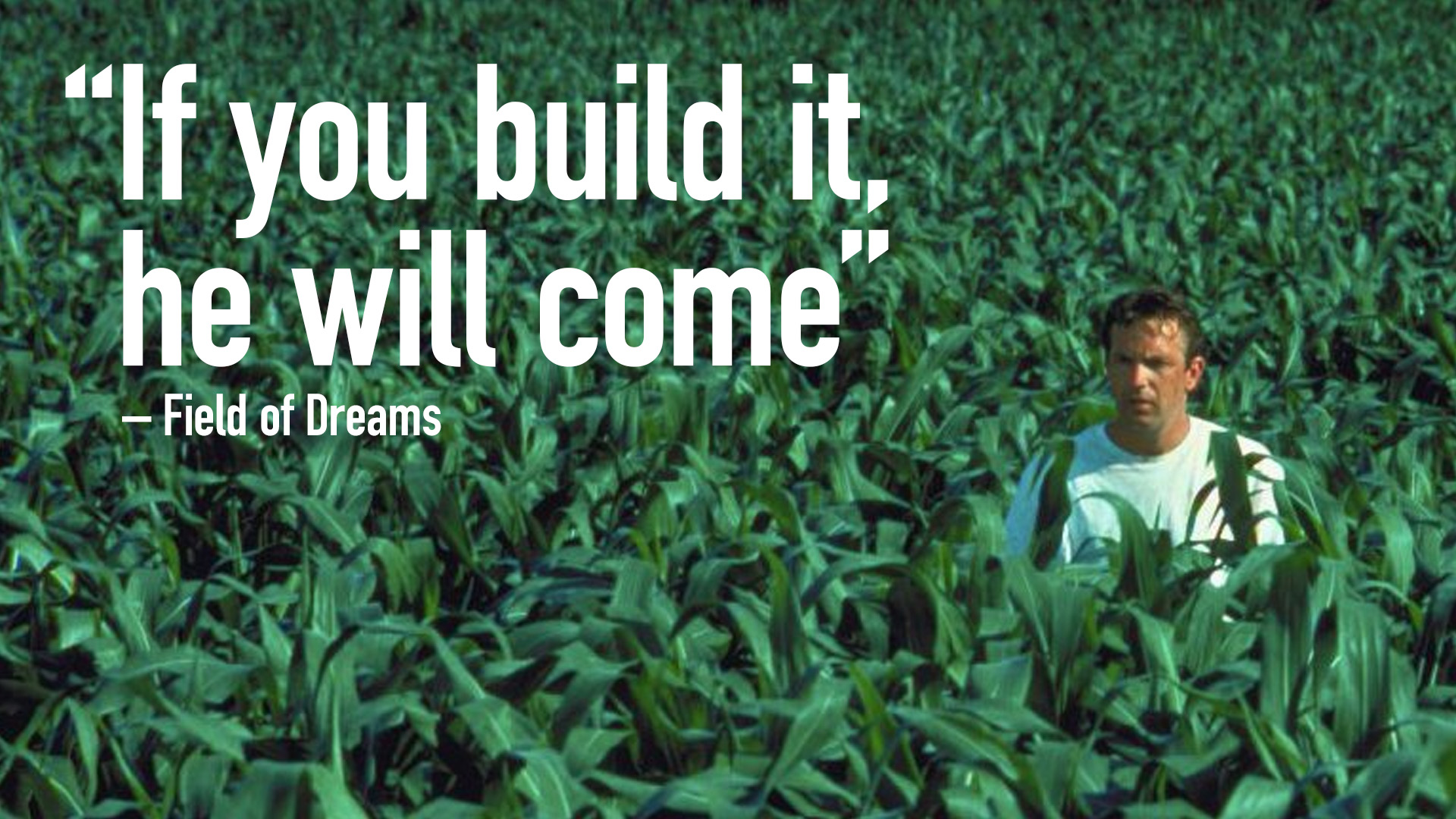
And more often than not it comes down to one thing. The Masterbrand – as it is currently constituted – doesn’t excite their team. They may not want to be part of a monolithic business. But build a strong Brand Idea – that accommodates what your employees do, and enables them to engage with your customers better, and like Field of Dreams (a Kevin Costner classic in our opinion), the outliers will want to come.
In a fragmented world coherence is your unfair competitive advantage
Customers are overwhelmed by choice. Businesses are becoming more diversified and complex. And employees increasingly need a clear sense of what they’re part of.
A coherent brand architecture makes your business:
- Easier to understand.
- Easier to buy from.
- Easier to cross-sell.
- Easier to work for.
- Easier to acquire into.
- Easier to grow.
But the real opportunity goes beyond simplicity. It’s about making all the different parts of your business work harder together. Creating a business that’s worth more than the sum of its parts. Making a really amazing omelette out of your eggs, if you like.
Because the real value of brand architecture isn’t in organising what you’ve got. It’s in unlocking what you could become.